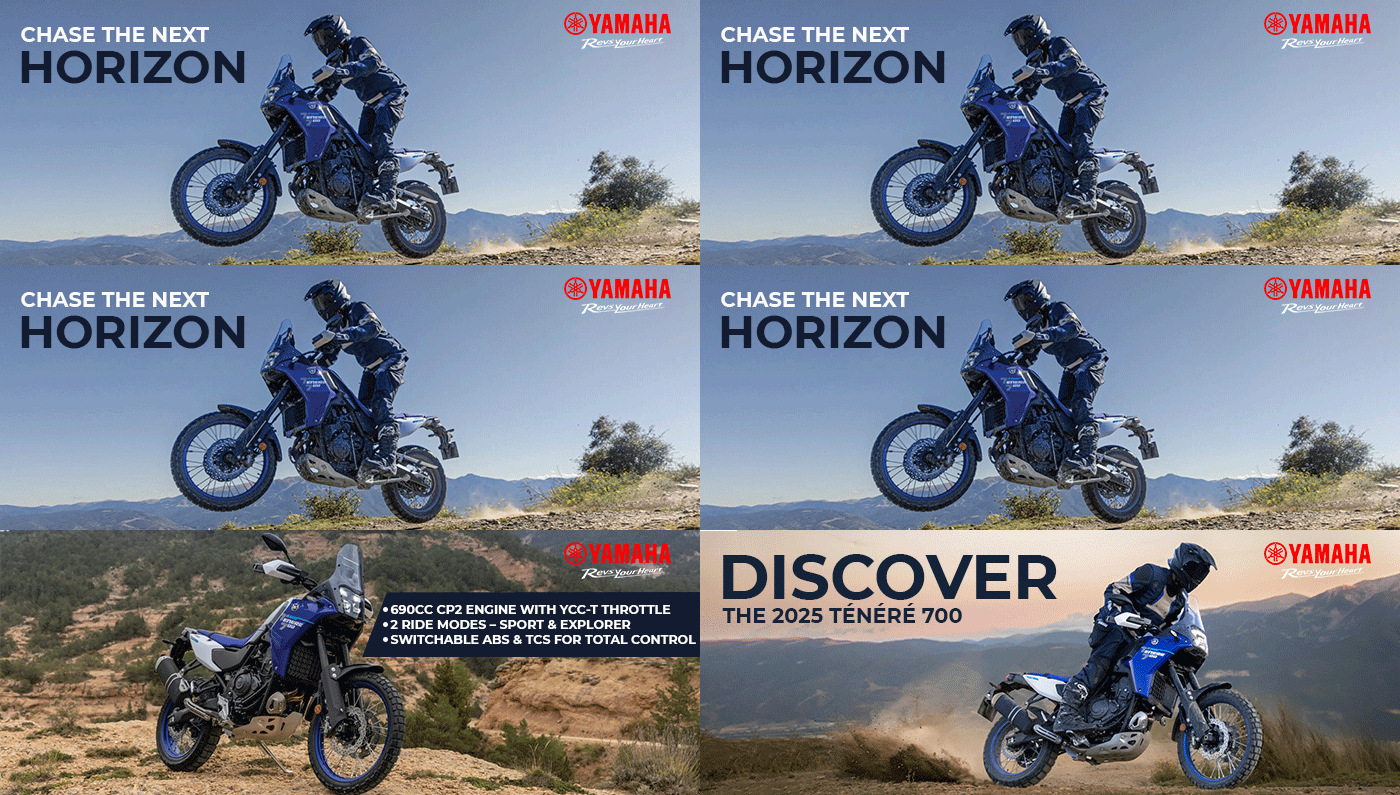
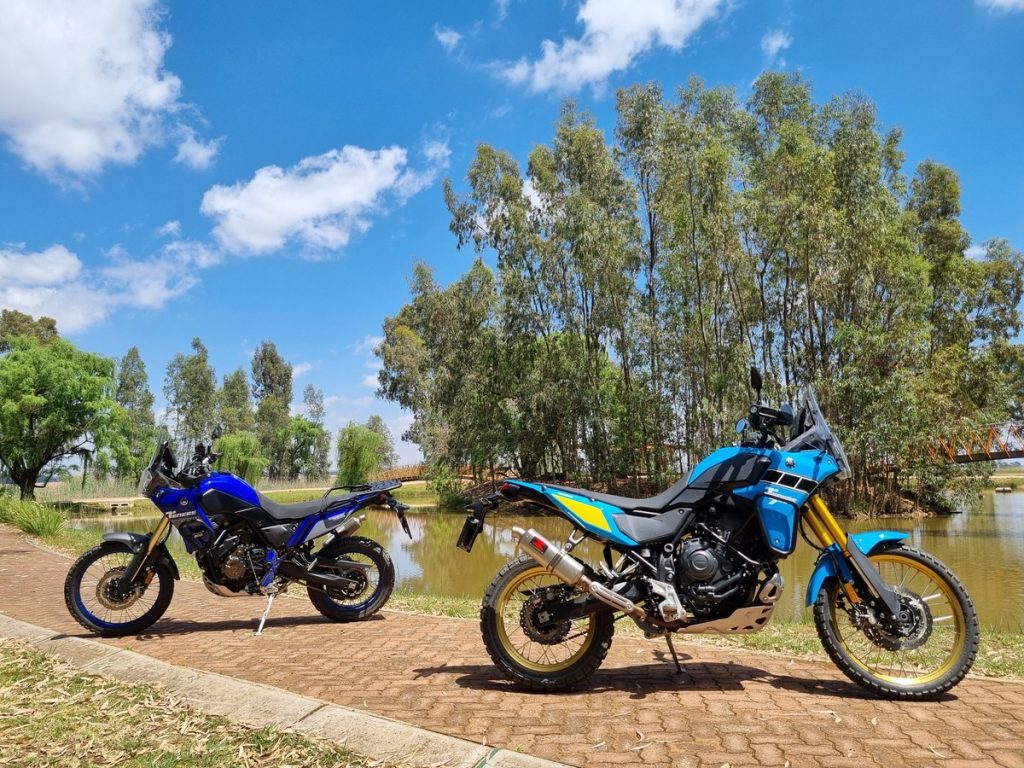
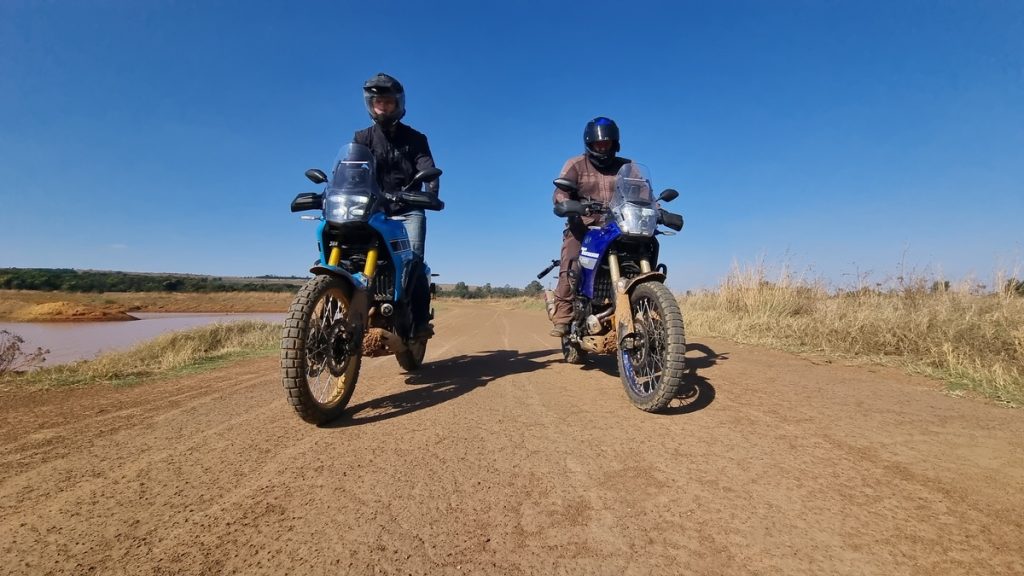
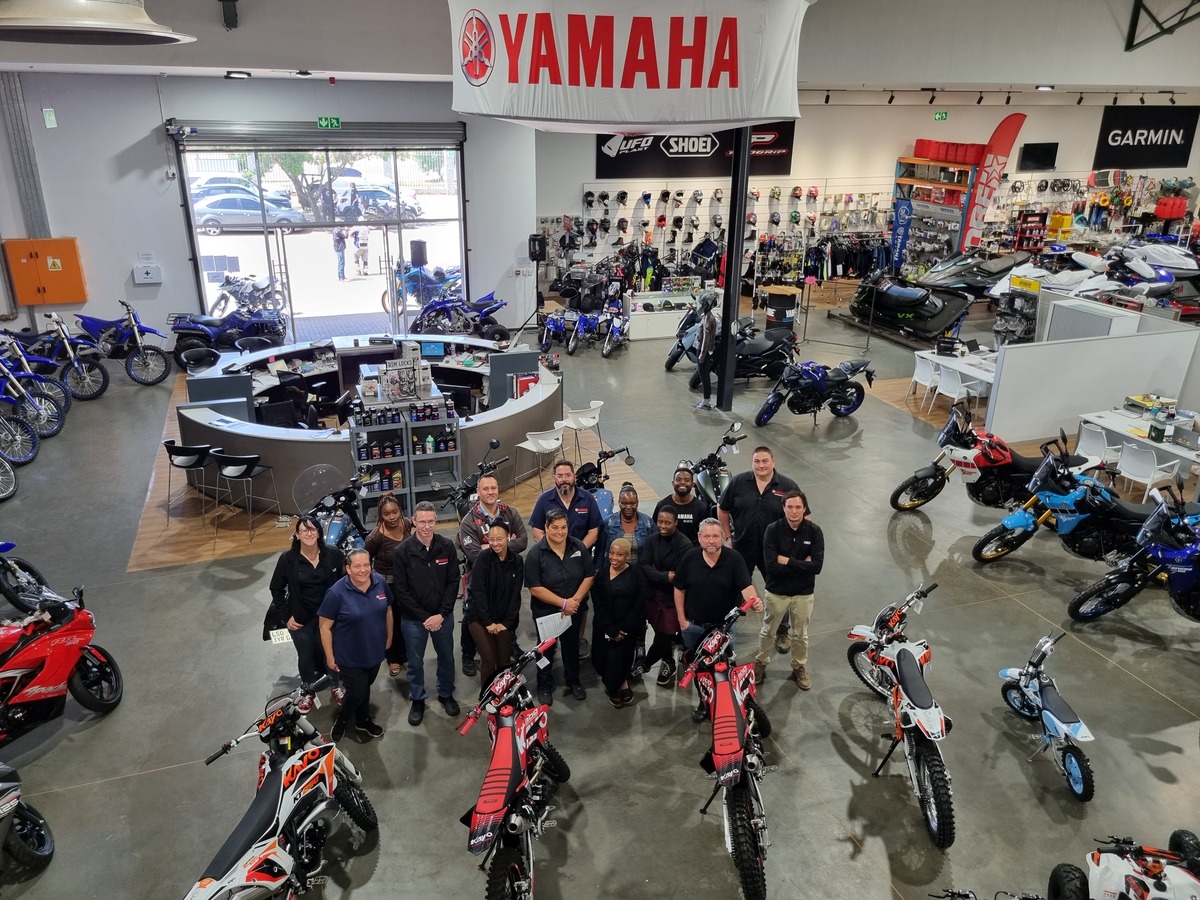
When the guys from Linex Lynwood called to let us know that the very latest Yamaha T7 was on the floor and waiting for a ride, we jumped at the opportunity.
To sweeten the pot, they also threw in a ‘24 model so that we could do a direct comparison.
When a new model of a bike is released, it’s often quite difficult to remember what the predecessor was like. Having both models on the day was absolutely brilliant.
We’ve always really liked the T7. Yup. Right from the very first one.
In fact – perhaps the first one was our favourite thanks to its simplicity. No rider modes or anything – just a basic midrange ADV machine that you could literally take anywhere.
The advantage of simplicity is the fact that you can build a bike to a price point, so that bike
Over the years, we’ve watched people make suggestions as to what can be improved – and over time, Yamaha has implemented many of those suggestions. Here’s a quick look at how the bike has evolved from its inception.
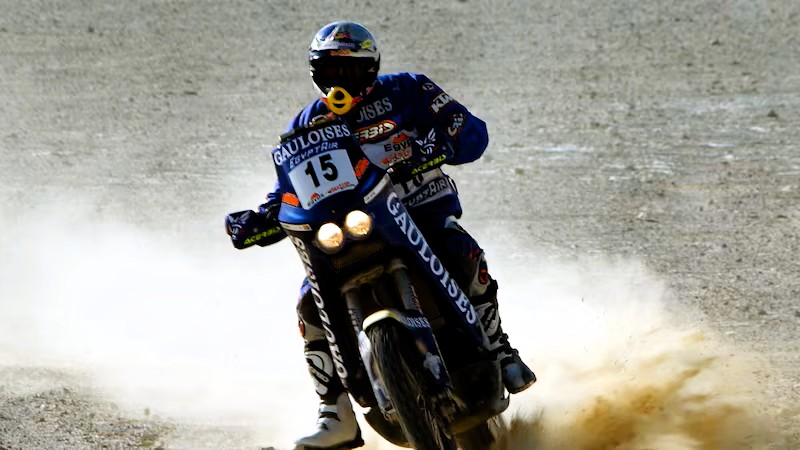
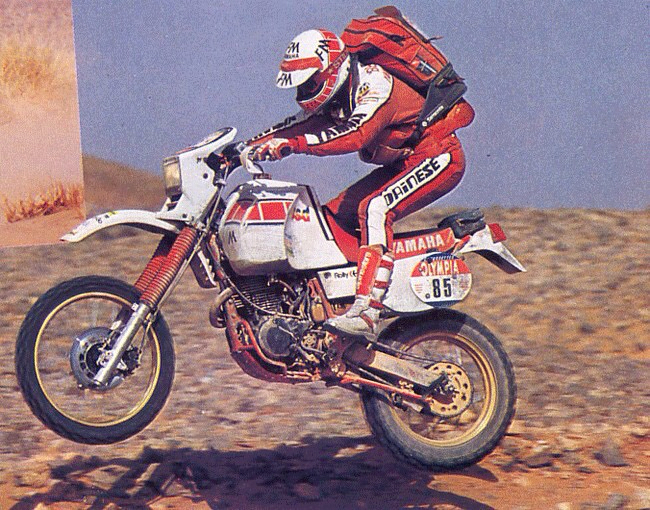
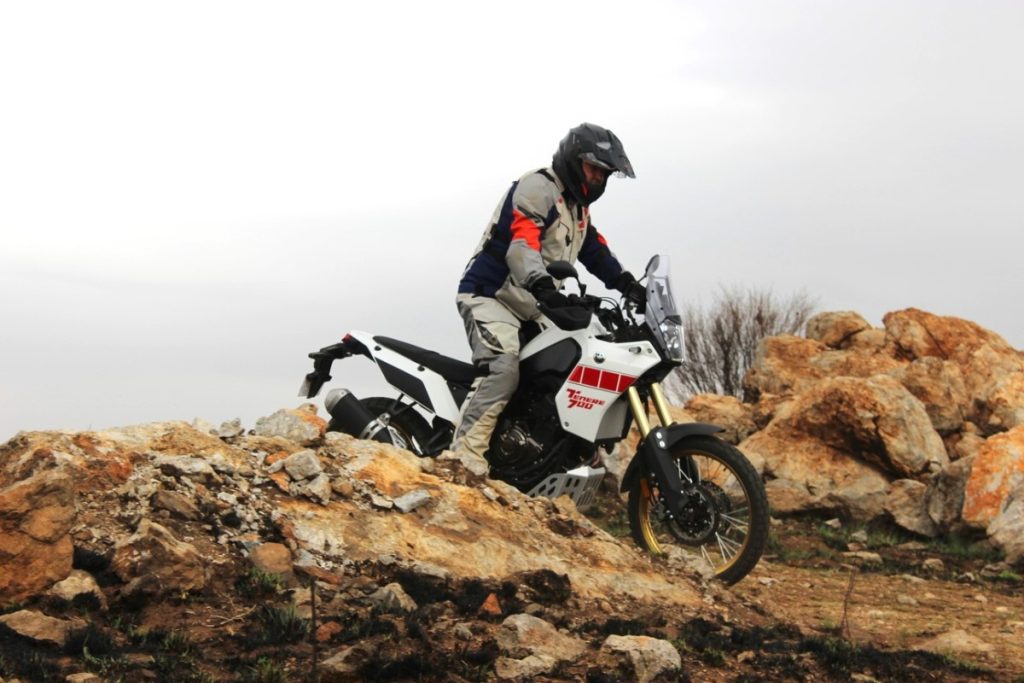
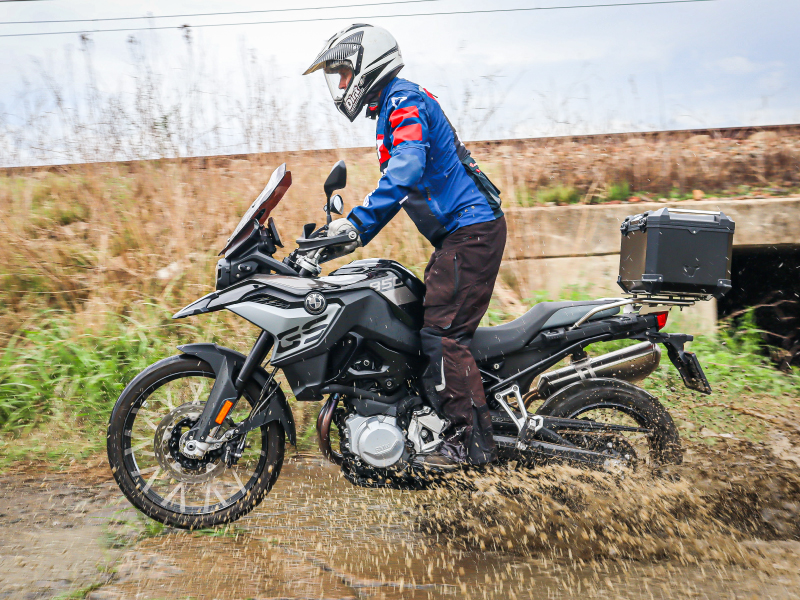
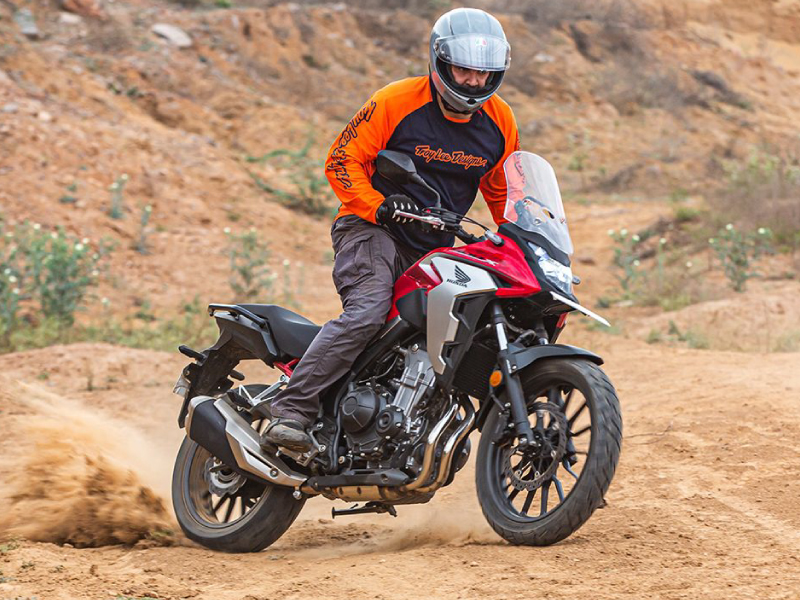
Can you guess the rider above?
Drop us his name, 1st correct answer gets a Dirt And Trail Cap.
A Brief Look Back: The Ténéré Legacy
The Ténéré name dates back to 1983, born from the legendary XT600.
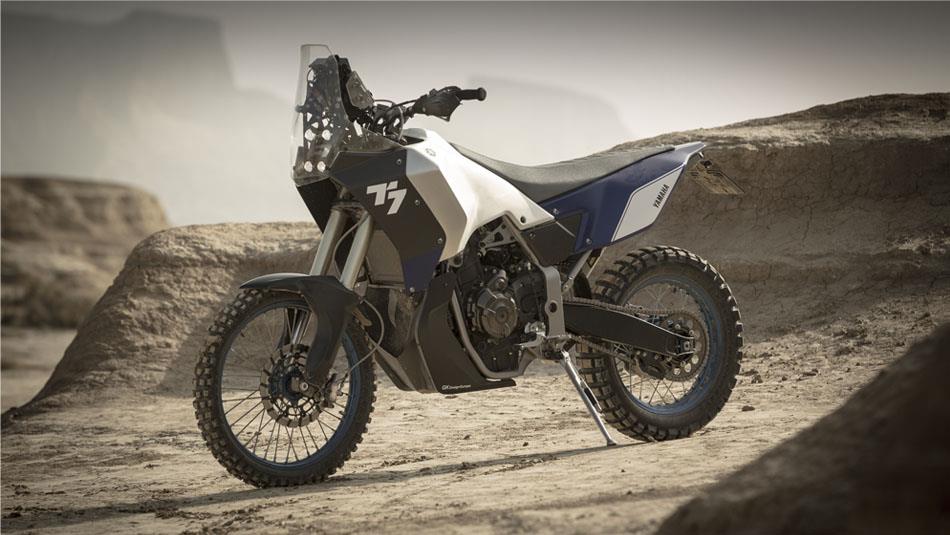
When Yamaha first rolled the T7 Conceptonto the EICMA stage in 2016, the world’s adventure riders collectively stopped scrolling. Here was a machine that promised something few big-bore ADVs could at the time: light weight, real off-road chops, and a proper rally look.
It was more than a prototype; it was a statement. And over the next decade, Yamaha turned that statement into one of the most popular middleweight adventure bikes on the planet: The Ténéré 700.
Yamaha pulled the covers off a metallic blue, rally-inspired concept that looked straight out of the Dakar bivouac in Milan in 2016. The T7 Concept wasn’t about horsepower wars or electronics. It was about purpose. South African riders started salivating at the prospect.
Powered by the MT-07’s 689 cc CP2 parallel twin, housed in a custom off-road chassis, and draped in carbon fiber bodywork with an aluminium tank, the T7 promised a return to rootsof adventure riding. Simple, rugged, and capable.
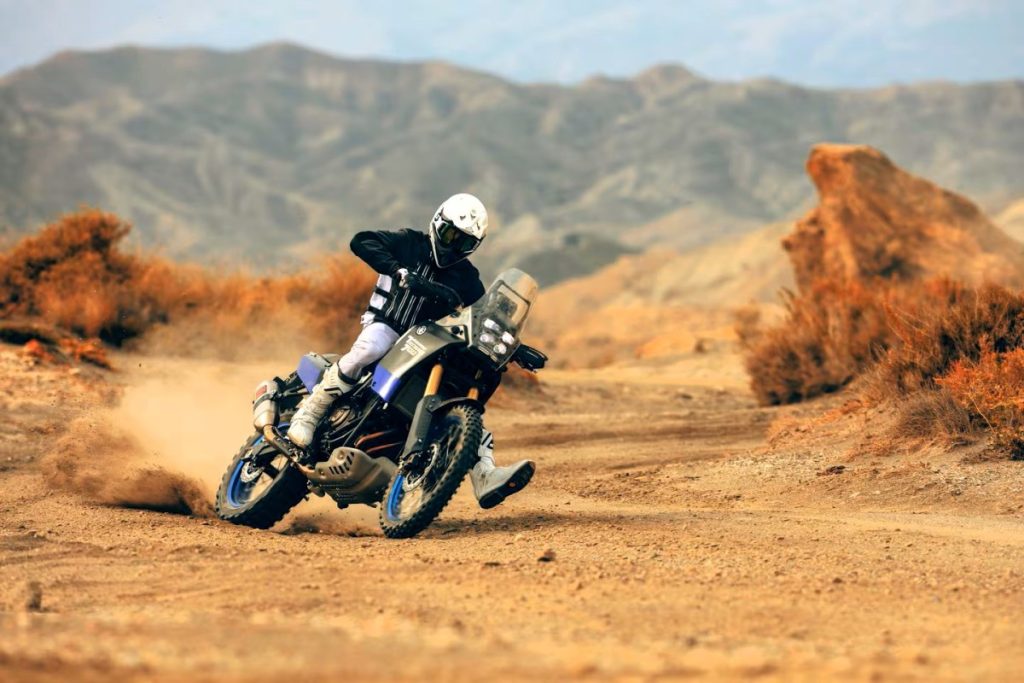
In 2017 Yamaha kept the hype alive with the Ténéré 700 World Raid Prototype. Yamaha sent it on a world tour, testing it across continents, sand dunes, and rocky mountain trails.
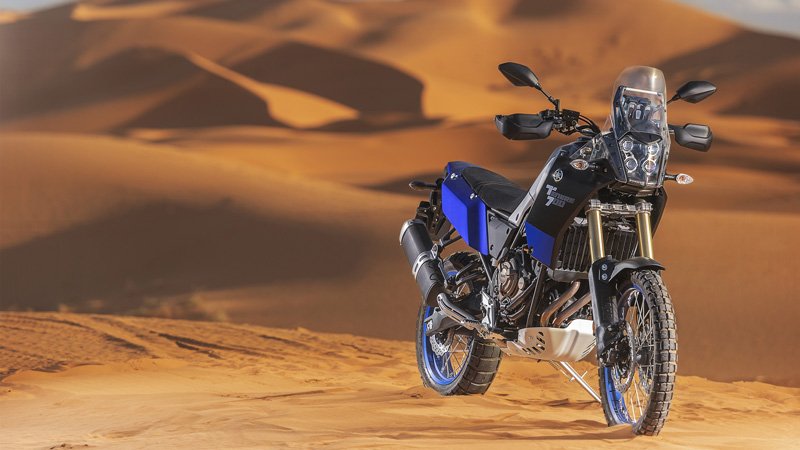
At EICMA 2018, Yamaha unveiled a production-ready Ténéré 700. Tall stance, rally nose, slim tank. But underneath, the bike had been re-engineered for mass production.
Yamaha kept the weight down and the electronics simple (just ABS), a modern rendition of the XT600Z Ténéré that once ruled Dakar, only now with a twin-cylinder engine.
Deliveries began in Europe mid-2019. The Ténéré 700 landed exactly as promised: a 205 KG middleweight with no ride modes, no traction control, and no frills. The motor was smooth, the gearing broad. Suddenly, every dirt-loving rider who’d been waiting for something between a 250 dual-sport and a 1200-cc behemoth found their sweet spot.
But, we had to wait. Thanks to global demand, the first T7’s only arrived in SA in December of 2020. Since then, there have been incremental changes like the dash, paintwork and small bits and bobs.
Like the new race Blocks? So do we...
2025 sees the biggest updates yet… according to Yamaha, there are more than 250 changes on this bike from the last model.
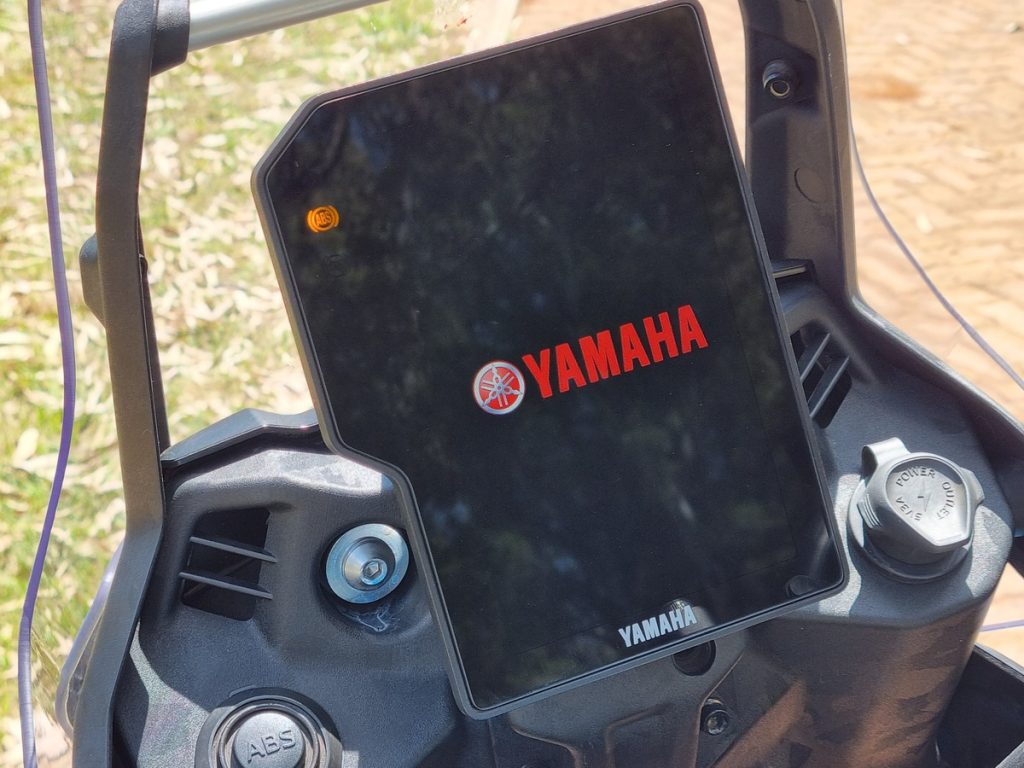
Ride-by-wire throttle introduced selectable ride modes and traction control, while the latest 6.3-inch TFT display brings the cockpit into the digital age. Turn-By-Turn navigation and connectivity are prerequisites these days.
Honestly, a personal opinion is that thanks to that super user-friendly CP2 engine, it doesn’t actually need all of the electronics.
The gearbox has received revised engagement dogs for smoother shifts, the tank is reshaped and moved slightly forward for better weight distribution, and a new seat and controls enhance ergonomics.
Possibly most importantly, the latest Yamaha Ténéré 700 has significantly upgraded, fully adjustable suspension which is a major improvement over previous years suspension which have been criticized for being too soft, especially by the hard-core brigade and heavier riders. Preload adjustment has been added to the fork, a feature that was notably lacking from the otherwise fully-adjustable setup on the previous bike and out back, the whole shock has been redesigned.
The T7 grew up but didn’t sell out. It’s still the same bike that loves to get dirty, only now it’s a bit smarter about it.
Extras:
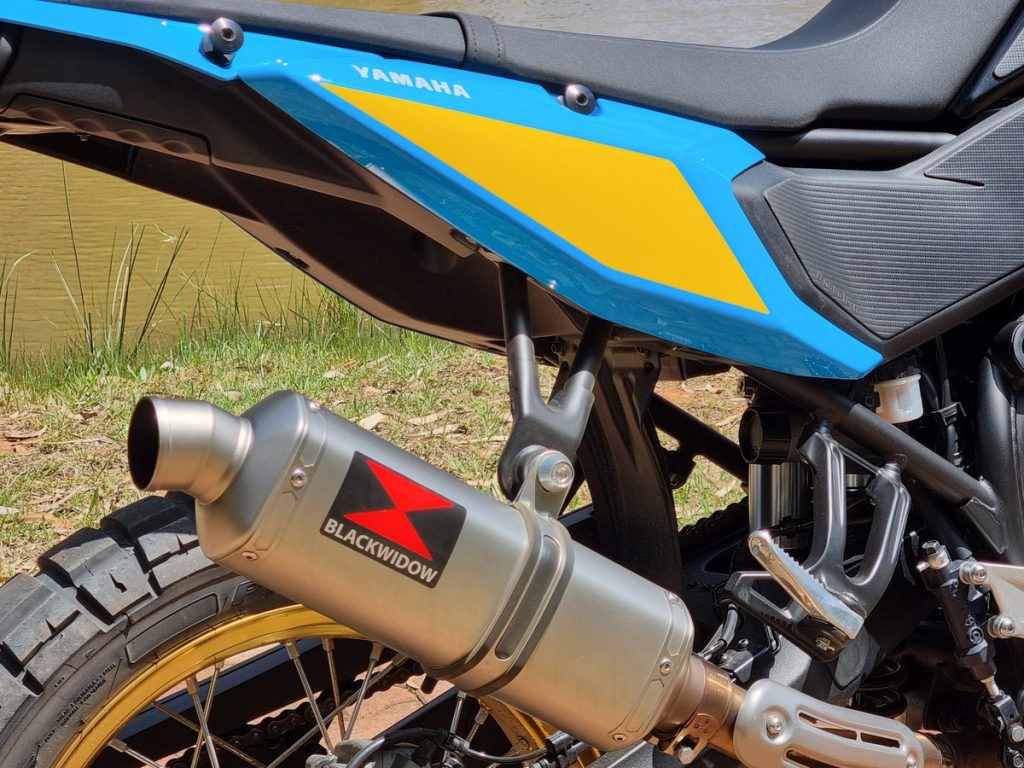
Both of the bikes we rode had GIVI crash bars and Black Widow Slip-On Pipes fitted. We’d do the same thing were we to buy one. We’d also upgrade the standard brushguards.
Our Route: took us from the Linex Lynwood store, out through the back of Silverlakes to a gorgeous, rock strewn, rutted, gravel road out Donkerhoek way. From there, we wound our way through to an abandoned quarry where we set out a short dirtbike loop and spent a few hours swapping bikes.
After the obligatory burger and chips, we swapped bikes and took the same routes, this time through some mad peak-hour traffic back to the store.
Immediate impressions are that the ‘25 T7 is smaller and more compact than the ‘24. The seat is narrower which makes getting your feet to the floor easier. The 16 litre tank feels narrower and more natural. Off the bat, that is immediately what we felt.
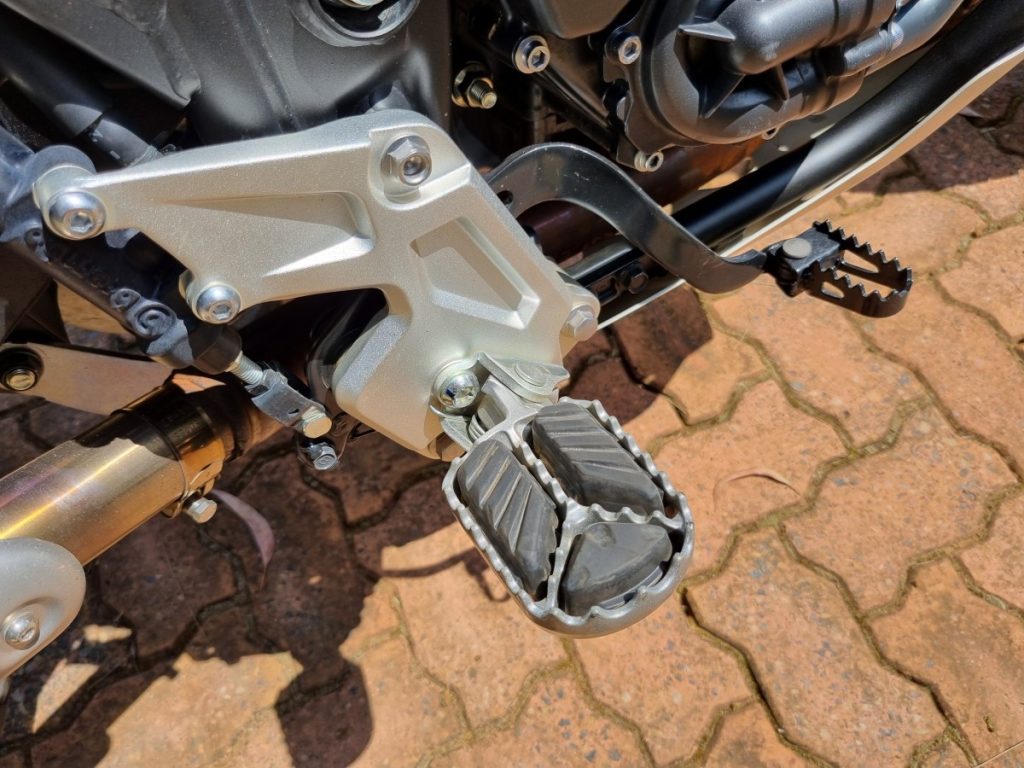
We left the bike in full power mode as we crept our way out of town and onto the gravel. The next impression is one of a better centre of gravity, with full fuel tanks the ‘25 feels a little bit less top heavy. Also on the new bike are wider, more dirt oriented pegs. The screen is a good height and doesn’t obscure vision. It does a pretty good job of keeping the wind out of your face at higher speeds. Sitting or standing, the ‘25 feels perfectly comfortable.
Nice!
We played with the electronics package just a little – it’s all pretty intuitive, but we figured that we’d play more when we got to the tighter, twisty stuff. The bikes ate the long gravel section with ease with both riders grinning as we hit the end and converged onto the tarmac. So far, the bikes were pretty evenly matched in terms of performance. We did of course do some Flat tap stuff down the gravel and easily saw speeds north of 170KPH.
We’d guess that a 180 KPH plus top speed is easily achievable. Onto the tar at a more civilised pace we went. Both bikes feel comfortable and well planted, and they are pretty evenly matched in terms of acceleration and overall performance.
The Tighter Trails:
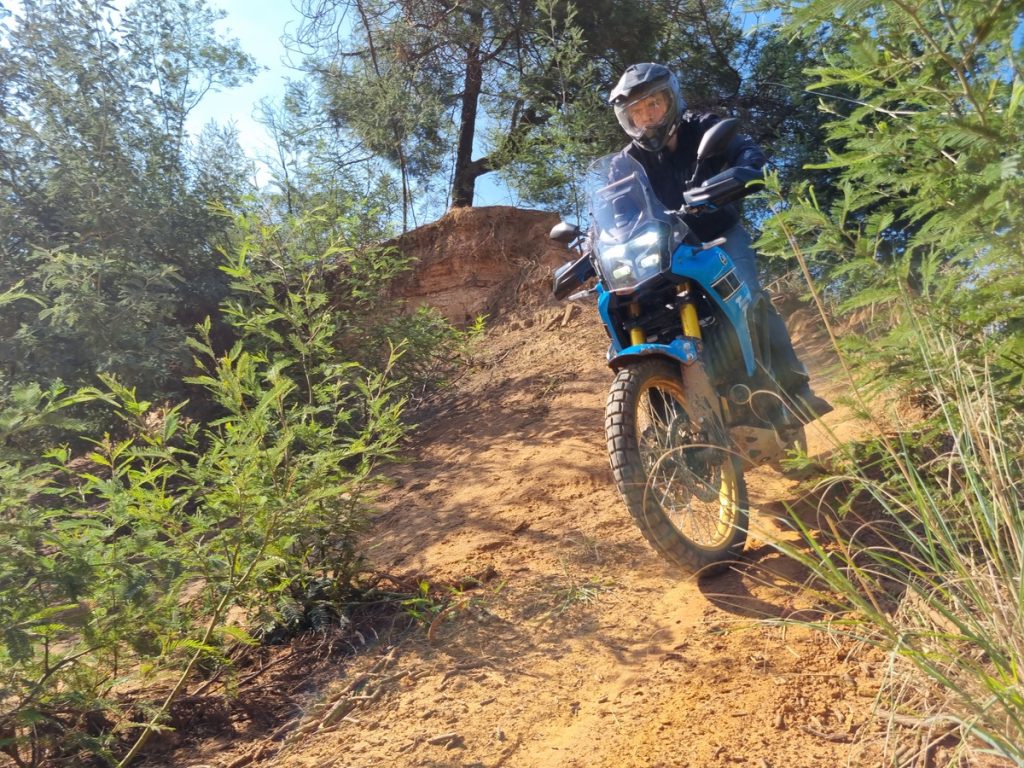
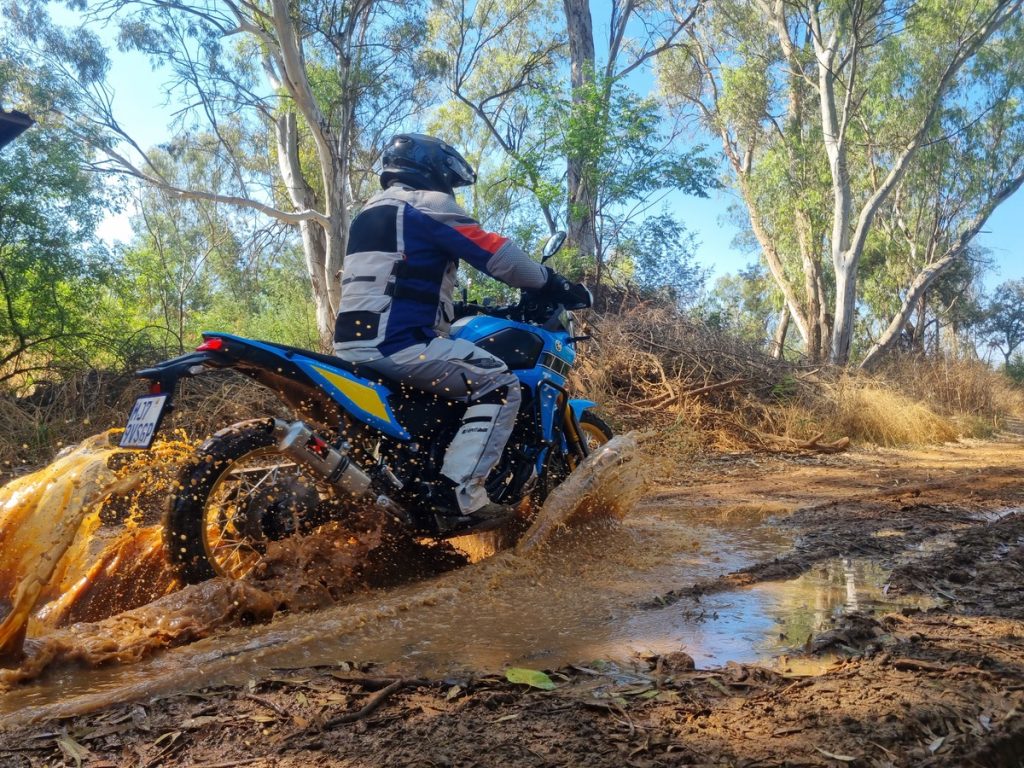
Right then. This is the plan. A lekker loop with a groot drop off – a few muddy puddles, some ruts and tight twists through the trees. Do a few laps, swap bikes, do some more…
You can feel that Yamaha has focussed on what counts in the dirt. The bike is now closer to a big dirtbike than a small adventure. That torquey parallel twin engine is a real gem. Perfect for low down trundling and angry enough to get going without scaring the hell out of you. It feels lighter and nippier than the ‘24. Also, the suspension feels – well better.
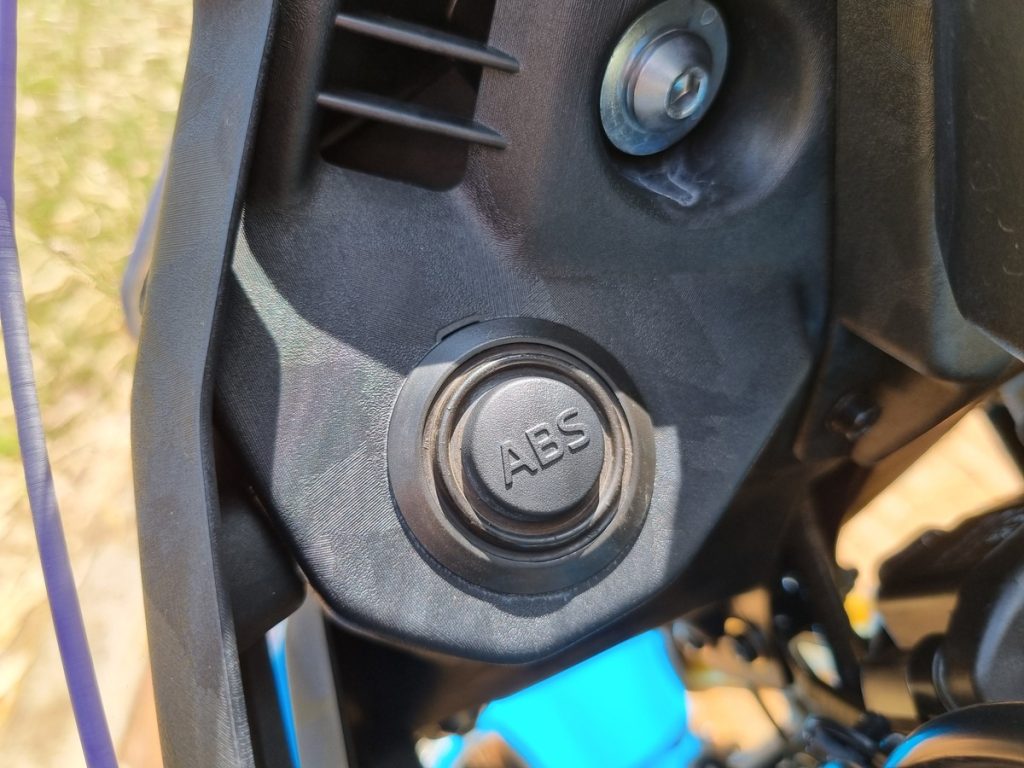
Switching rider modes is easy, they give you full power and then Explore mode which tones things down a bit in the trickier stuff. You also now get switchable ABS and traction control, so you can set the bike up the way you want to, but…
The 2025 T7 does not remember pre-settings for features like ride mode or ABS mode, so you need to manually select the settings each time you start the bike.
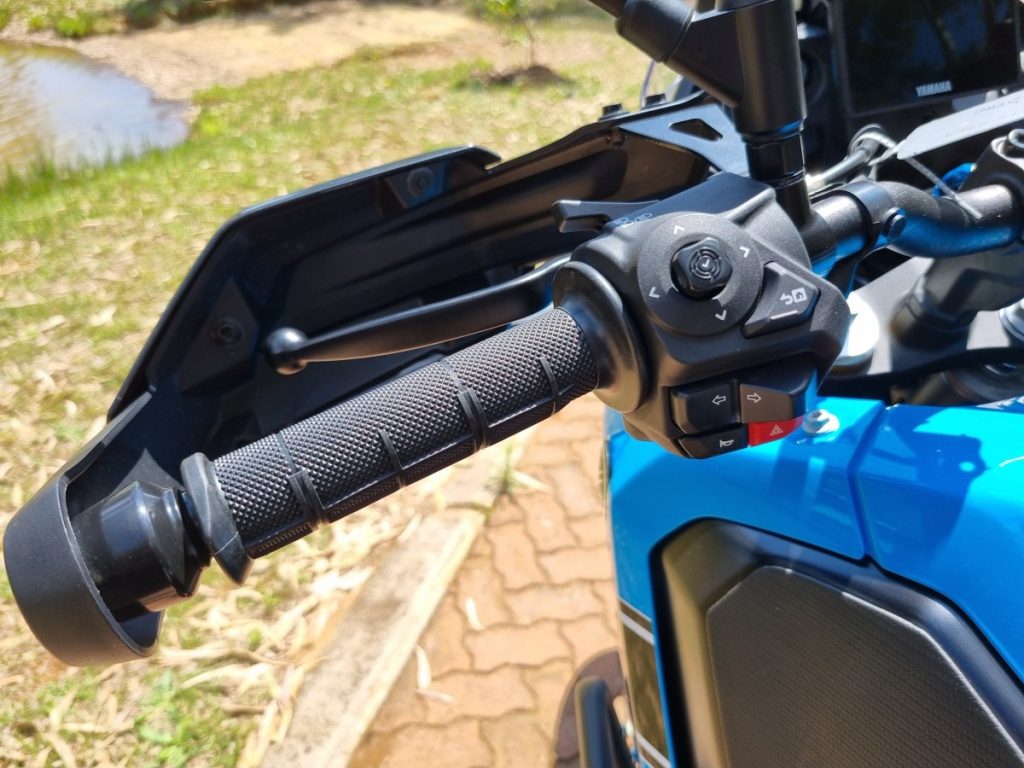
The new bike is littered with updates like a new switchgear, self cancelling indicators and wide footpegs.
Oh yes! There’s a new switchgear for the indicators and they are now self cancelling. Cool huh!
After a few laps at full power, we set the bike into Explore mode and that’s when Mary Poppins stepped in with her umbrella, calming things down and keeping things in control so that we could trundle our way through the obstacles. Needless to say, that was only engaged for about one lap per rider. However… for wet, snotty, rock strewn passes it’s a really useful feature to have.
Comparing the two bikes – the ‘24 performs perfectly in tight terrain, it’s a very accomplished machine but the ‘25 is a smaller, better, more refined package.
We took the bikes onto some wider trails, not as tight and twisty – but flowy and a bit flatter. There we noticed that the ‘25’s low and midrange power delivery has been improved. Our faster rider Tristan was really impressed with the new suspension. His words, “ The ‘24 is pretty good, but the new bike just feels firmer, better planted and it goes exactly where you point it.”
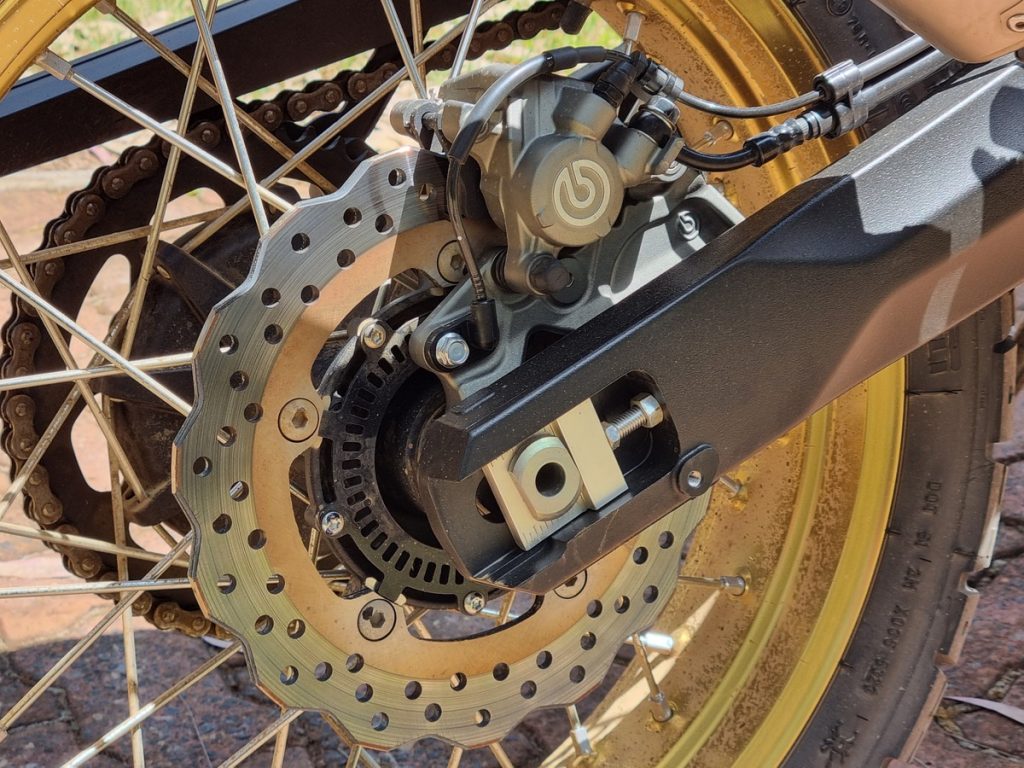
He’s correct. Throughout our ride, the Brembo brakes were superb, providing all the power and feel you could ask for. The ABS system can be turned off to allow sliding but when you leave it on it’s all very good.
On the return run back to Linex Lynwood, the changes between the two lots of suspension are pretty obvious. The new bike just feels, well, better, firmer, more purposeful – and it does soak up the corrugations and pokey rocks a whole lot better.
We do think Yamaha achieved what they set out to do. The ‘25 model is absolutely the best T7 to date. But they have kept the formula true for T7 fans.