18000km, 80 days, 18 countries.
By De Witt Oosthuisen
Jean Cooper is a psychologist who plies his trade amongst businesses in the Pretoria region.
Dr De Witt Oosthuizen Is a South African emergency medical doctor who lives in Australia.
They have just completed their epic adventure.
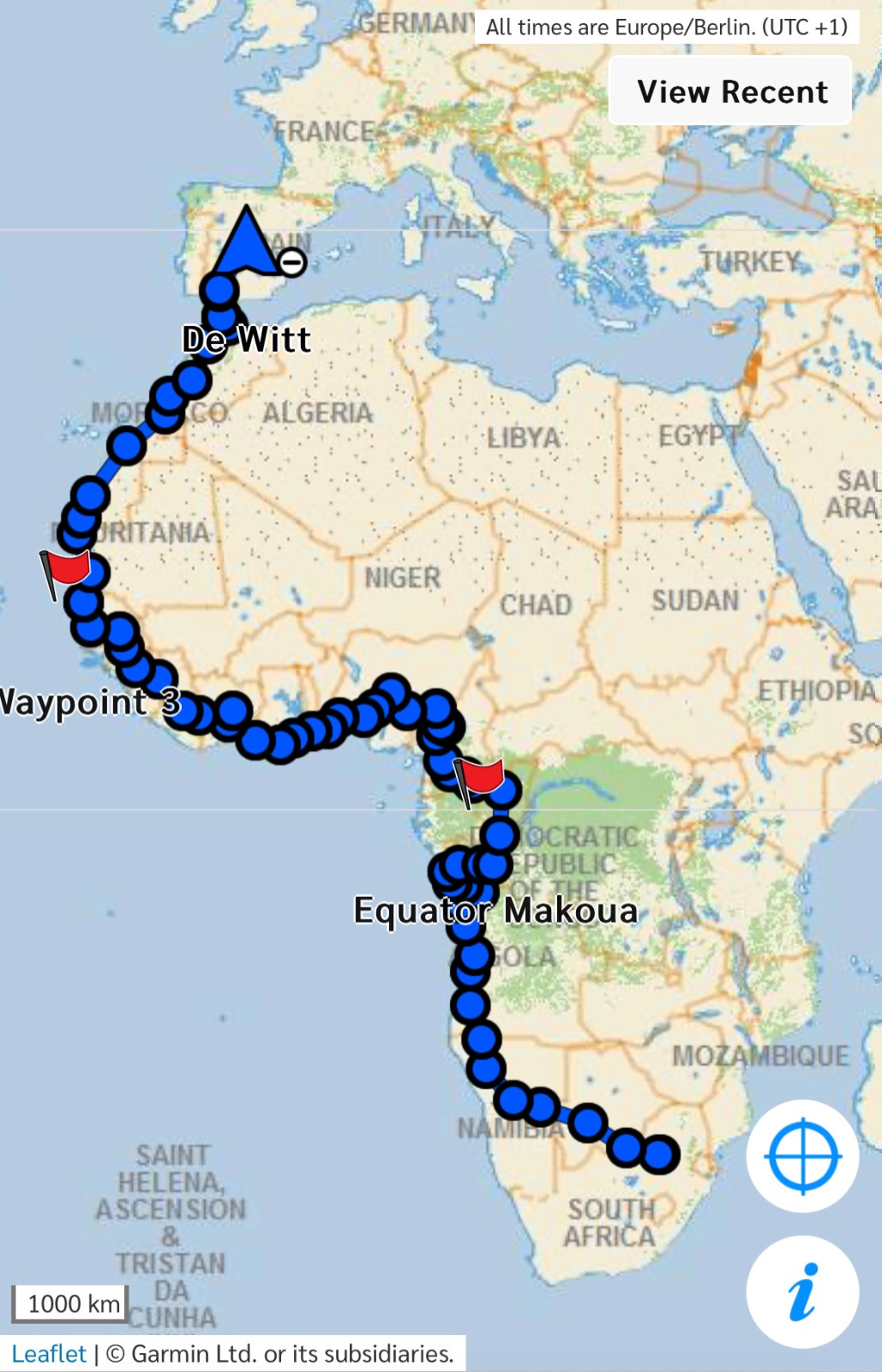
(Pretoria)South Africa, Botswana, Namibia, Angola, DRC, (Cabinda – Angola), Congo, Cameroon, Nigeria, Benin, Togo, Ghana, Côte d’Ivore, Guinea, Senegal, Mauritania, Western Sahara, Morocco, Spain (Madrid).
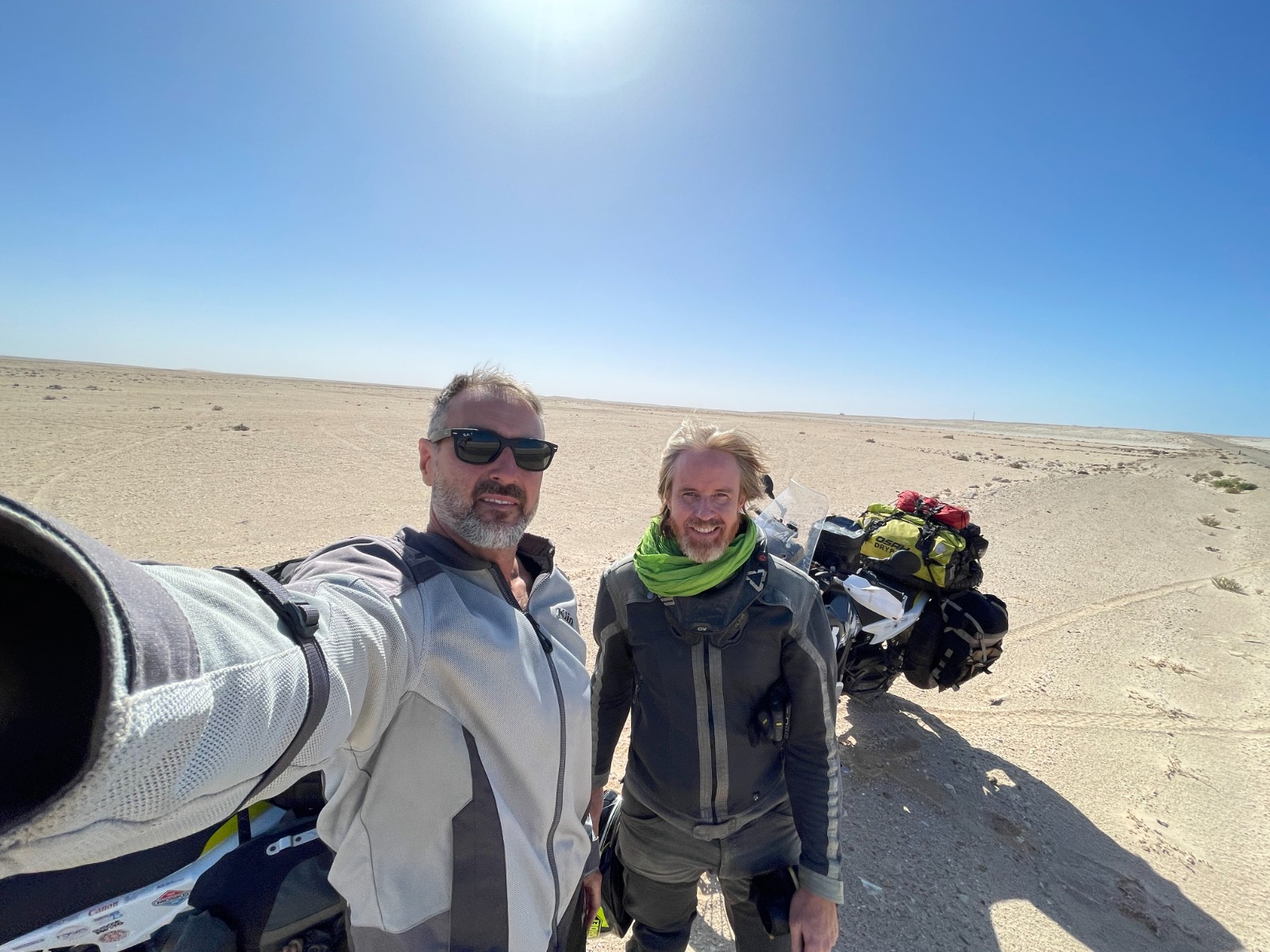
We are done, dusted and a couple of kilograms lighter. The wild, increasingly greying beards had been tamed twice now. As my sister said: the kids were looking forward to father Christmas returning, now all they get is a father for Christmas!
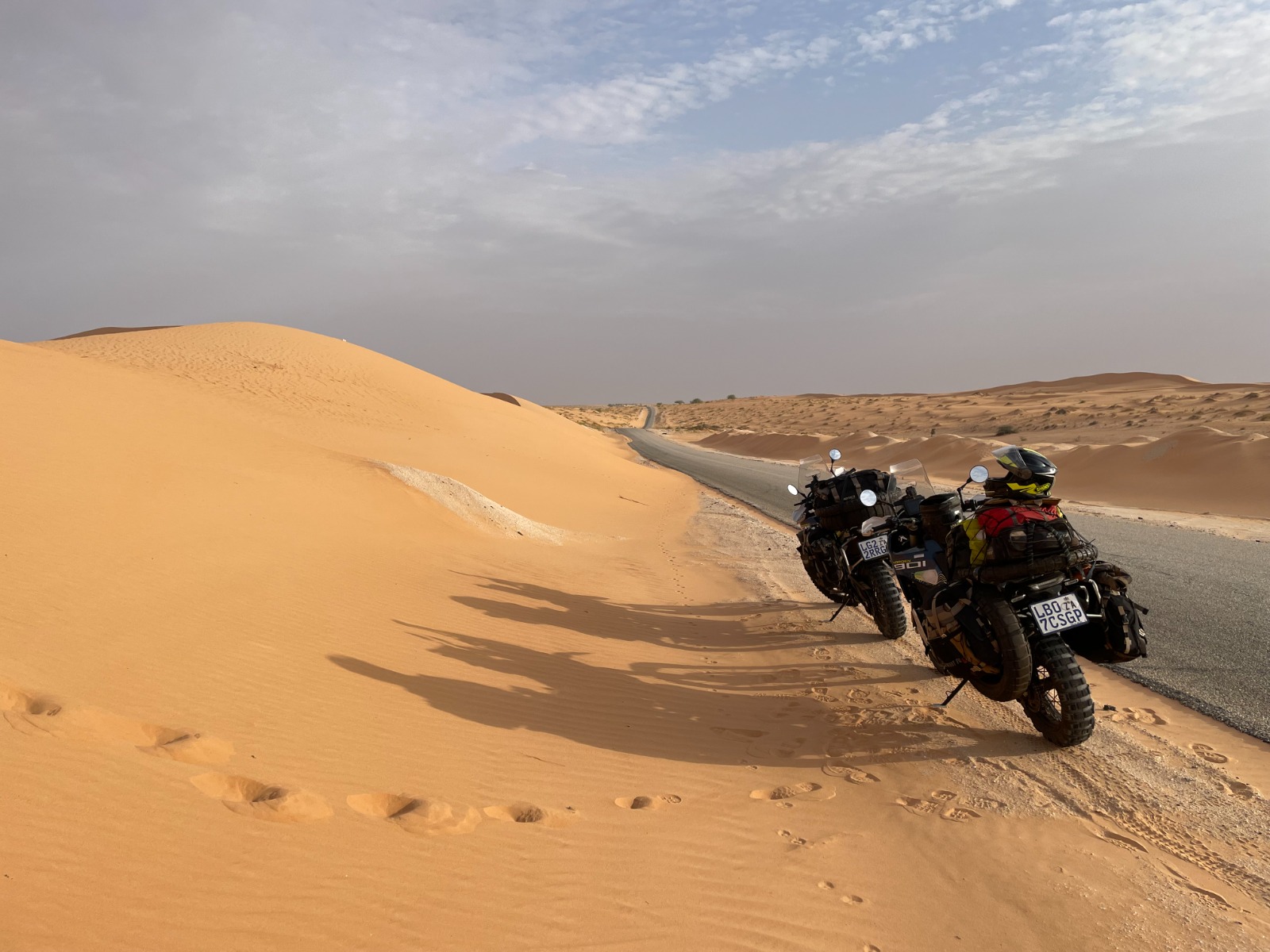
Since our last update in Mauritania we travelled through Western Sahara (politically sensitive and definitely do not refer to Western Sahara when you pass through the border post or any other police check points that are manned by official Moroccan authorities) and Morocco. The border between Mauritania and Morocco is manned by Moroccan immigration and your passport stamped into Morocco. It was one of the most efficient and high level immigration posts we passed through with the only country that put our bikes through an XR scanner both on entry and exit.
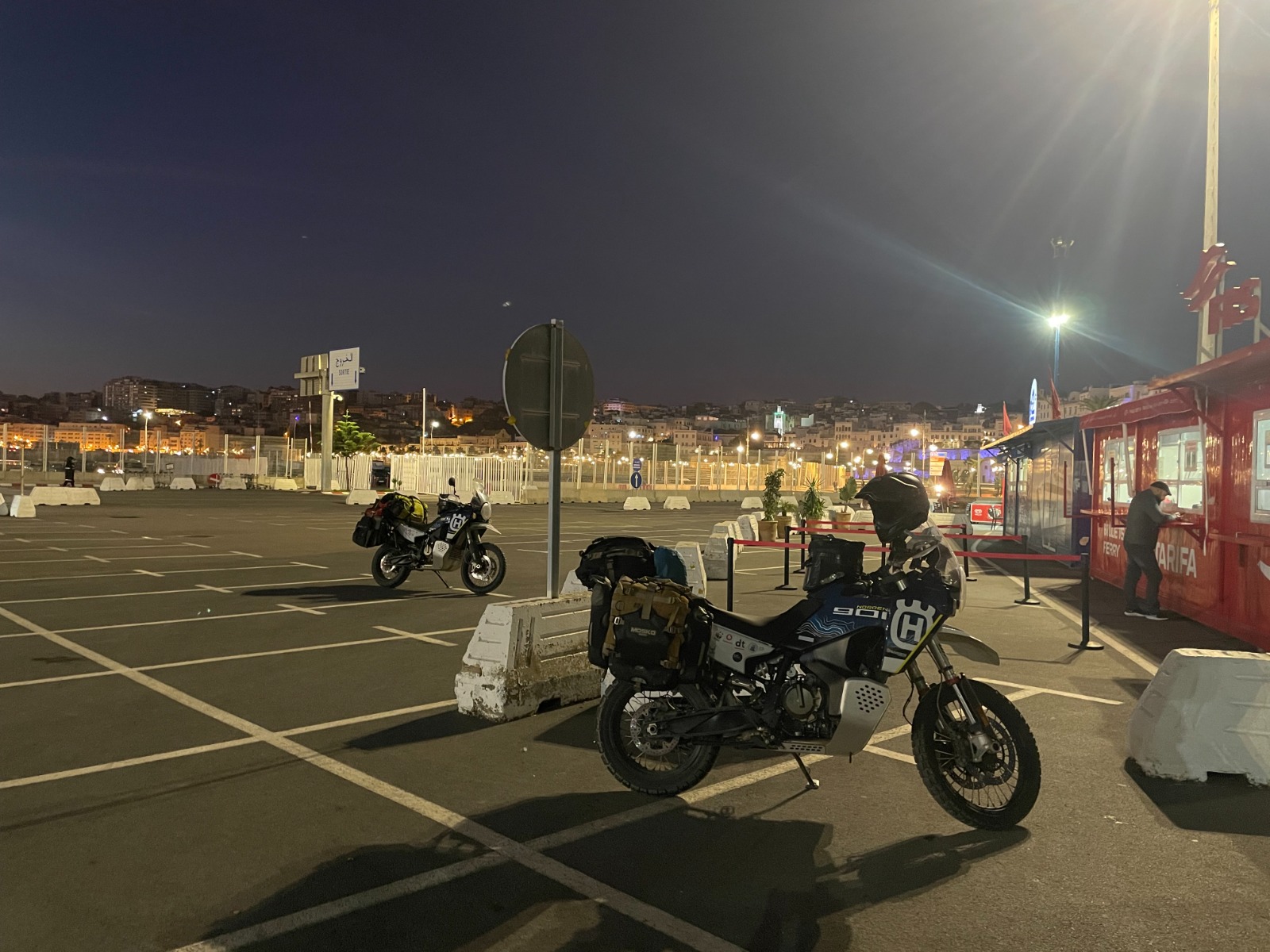
Entry of the bikes into Europe was by far the easiest. There was absolutely zero requirements of the bike and we literally rode off the ferry into the European Union with only a valid visa. No bike imports, nothing!
It was strange even though Morocco and Spain are separated by only around 16km of water it immediately felt different as we rolled off the ferry. Almost as if an invisible weight lifted off our shoulders. No more police checks with obvious clear freedom of movement.
Spain became a commute as by this time we completed our Africa trip, we were well over it and aiming to get home ASAP.
It was 700km+ of beautiful freeways where we experienced why Europeans lock up their bikes in winter or take them to Africa to ride. It was freezing and wet. We were kitted for Southern hemisphere summer riding through the equator and I’d already lost 2 pairs of gloves so was riding with motocross pieces of cloth.
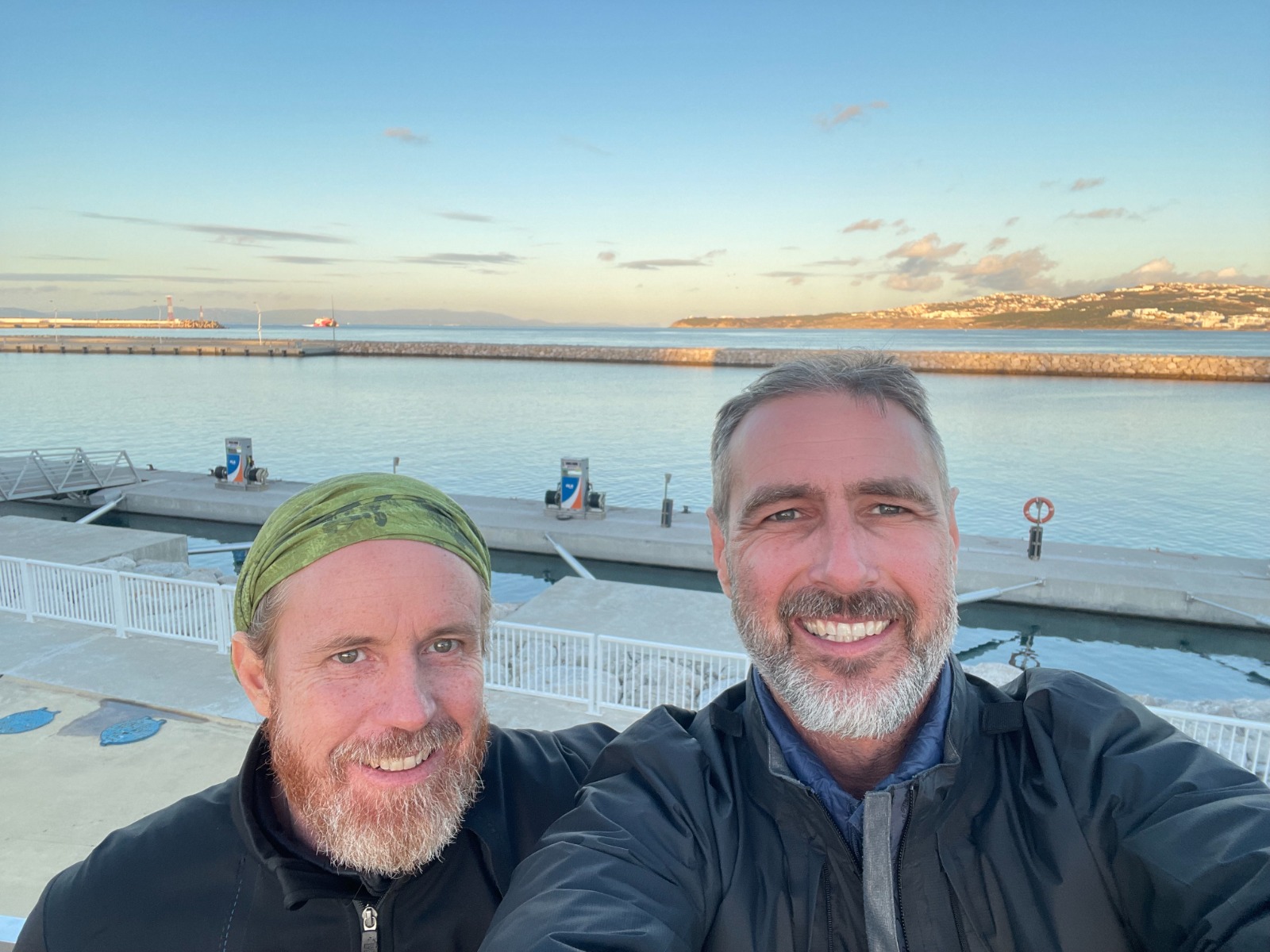
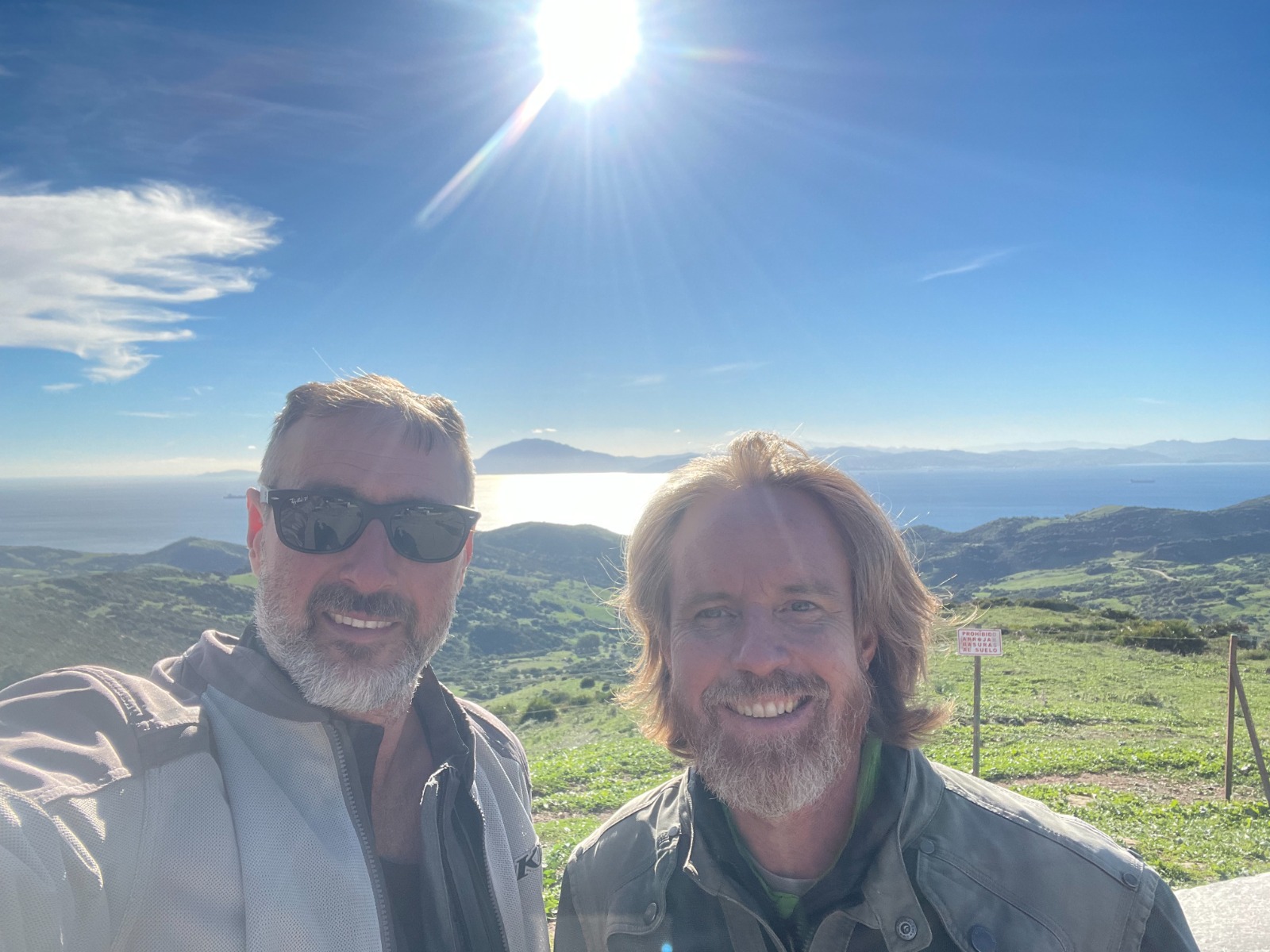
Arriving at our address in Madrid was an anticlimax. We pulled up, got off, took a selfie in the street and realised: Well this is it – we did it. The enormity of what we completed is still settling in.
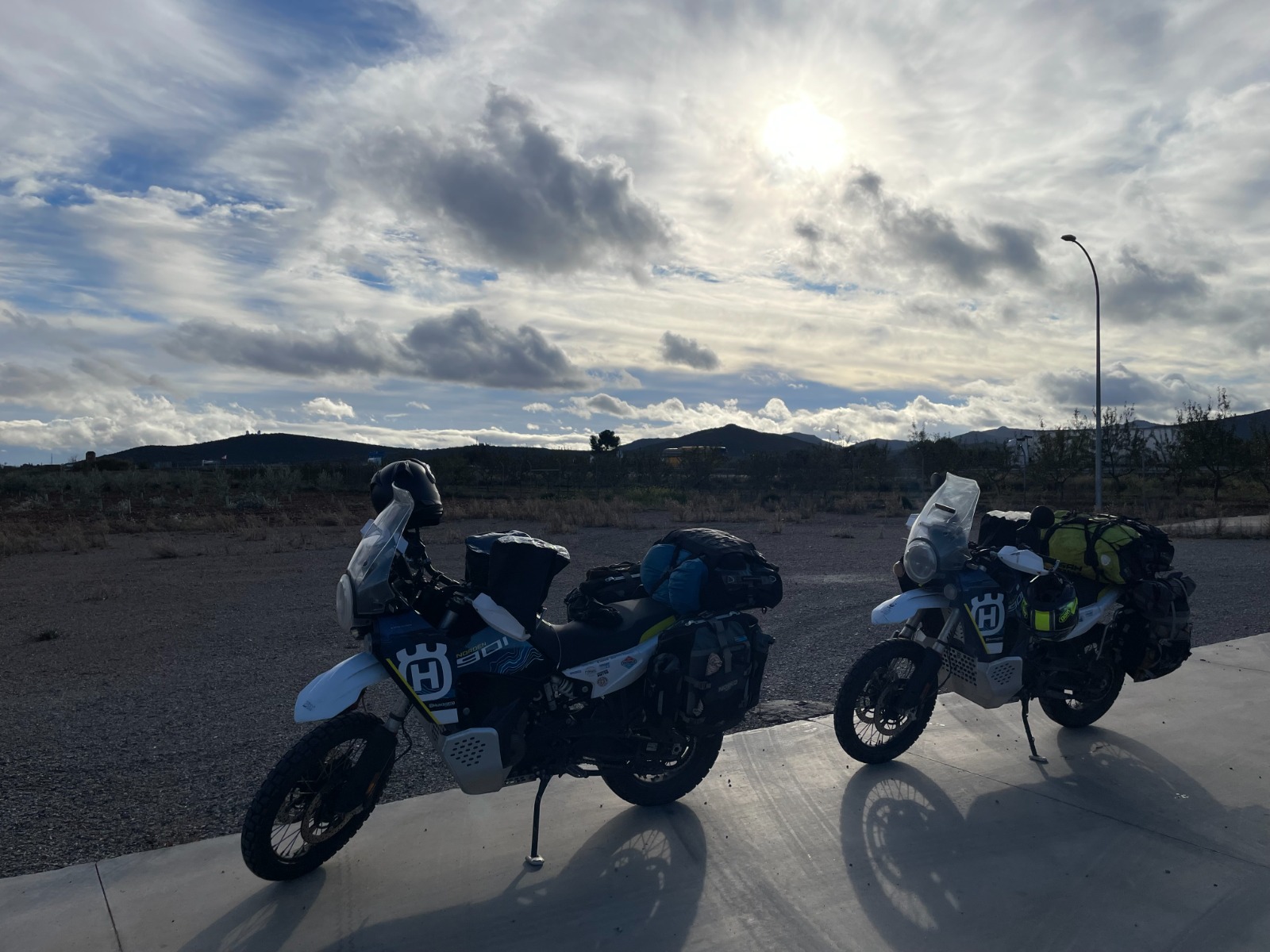
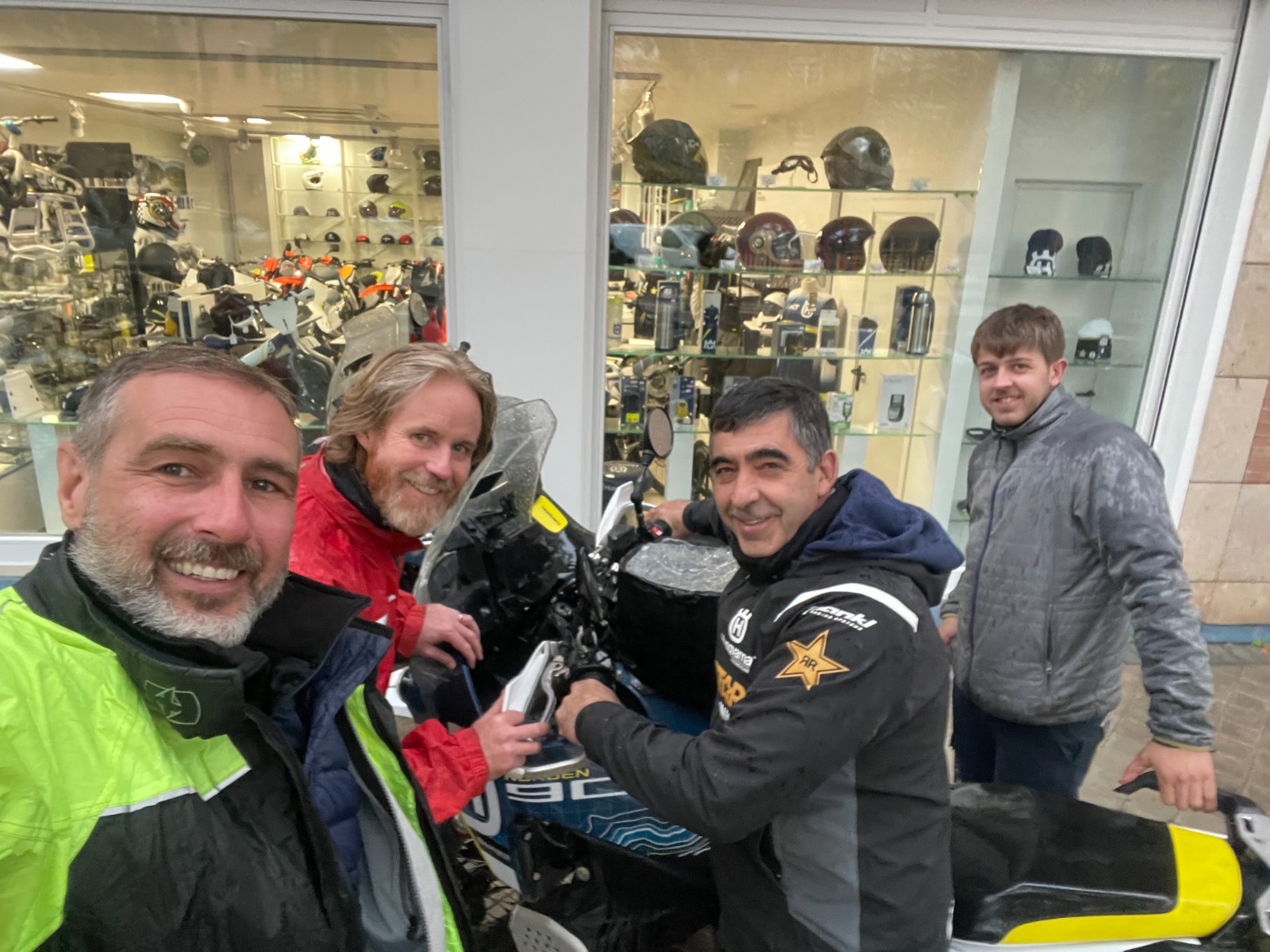
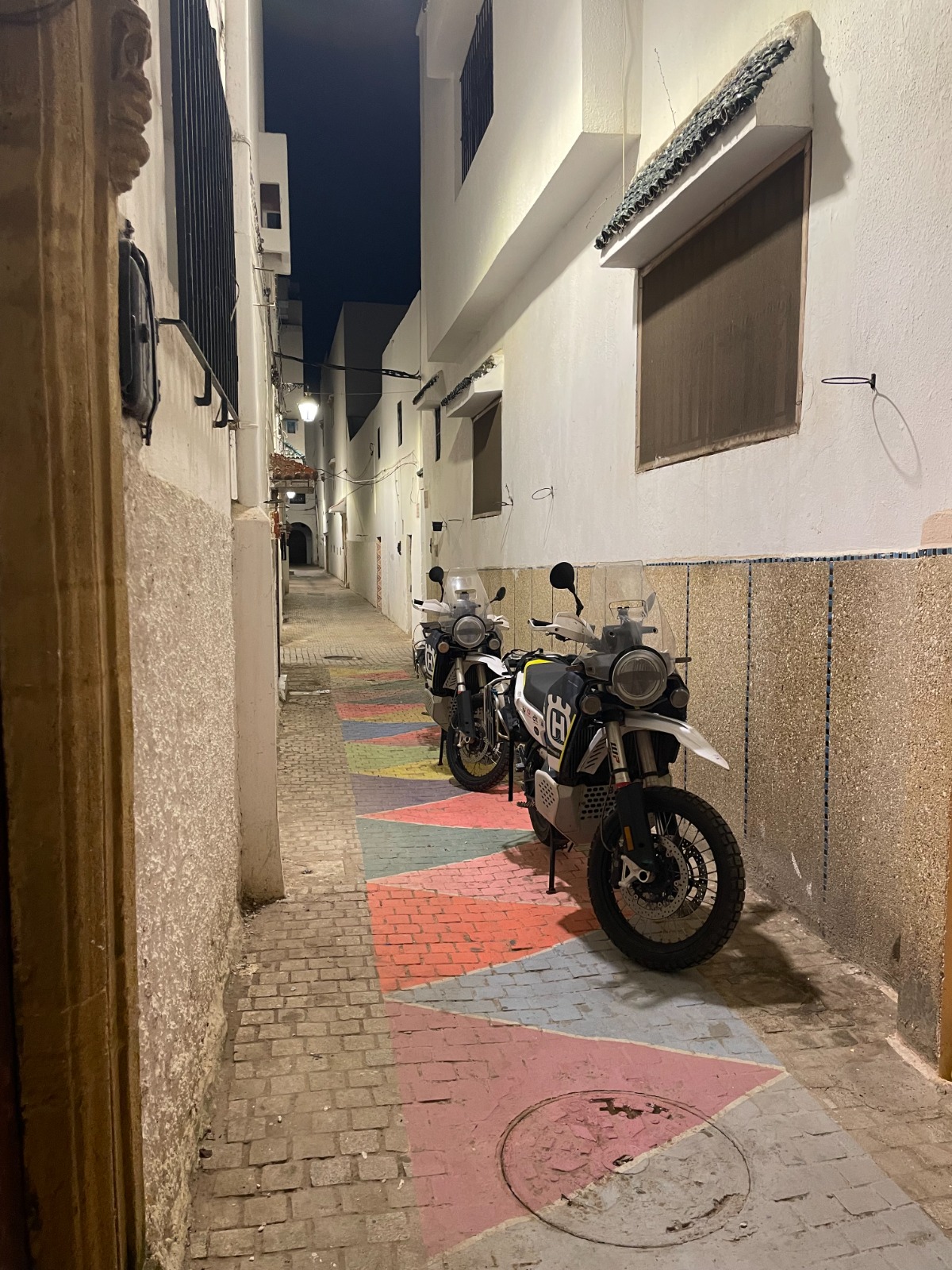
The bikes are still in Madrid with a Husqvarna dealer in order to try and sell them there. The import duties, taxes and typical red tape are slowly being worked through. Should this prove to be too much of a hassle we will truck them to Rotterdam from where they will shipped back to Cape Town over the next few months. The Christmas period is expectedly adding delays but hey, we’re not planning such a trip anytime soon. And no – we do not intend to ride them back!
Our reflections on the trip:
⁃ We did it quicker than we though it would take. 80 Days v a planned 90 days.
⁃ 80 days on a motorbike is a long time!
⁃ Africa is incredibly big, don’t be fooled by the disproportionate size on a world map due to the mercator projection.
⁃ We didn’t get malaria because we took prophylaxis. Met 3 other guys on the road who didn’t take prophylaxis and got malaria. That, if you’re lucky, adds at least another week to your trip.
⁃ Western Africa is not set up for tourists and you quickly get over chicken, fish, rice and chilli sauce. No matter how good to tastes. We steered clear of red meat as the type of animal you consume is not readily identifiable.
⁃ Southern Africa (I’d describe that as up to Angola), Central and Western Africa (DRC up towards Senegal) and Northern Africa are so different it could very well be on different continents.
⁃ Dealing with 33 different immigration posts tests anyone patience (not that I have much of it anyway…)
⁃ The carnet is a waste of money if you get it from South Africa. It is ridiculously expensive. Yes it makes border crossings a tad quicker but that’s it. It took us on average 2 hours to clear a border post obtaining a temporary import permit and we never had to pay a bribe anywhere to get one.
The bikes (Norden 901 Expedition)
⁃ We were incredibly fortunate not to have suffered any mechanical problems. Not even a flat tyre or bent rim.
⁃ The only 2 issues we experienced were one ABS cable that scuffed through on the rear tyre on my bike and a frayed clutch cable at the handle I caught just in time. I think this was just simple wear and tear.
⁃ We regularly cleaned, oiled and tensioned the chains as well as cleaned the pre air filters.
⁃ Fuel consumption for the first 10000km was 4.1l/100km this increased to 4.5l/100km for the last 8000km. I think it is because the road opened up and we increased our speed to between 110km/h and 120km/h with strong head winds. The first 10000km we rarely went up to 110km/h.
⁃ Loading any bike for a trip this long increases weight significantly. I never weighed my luggage before or during the trip but flying home it weighed 46kg on check in at the airport. I could probably add 10-15kg for water and spare fuel to bring the total to around 60kg additionally.
⁃ The tyres. We started on Pirelli Scorpion STR’s. These were great and would have been sufficient for our type of trip of which the majority of road surface was bad, potholed sealed road. We did change to Mitas E09 Daker in Cameroon for the wet, mud and they were perfect for this. More surprising to me was how good they held up for the rest of the trip on dry sealed surfaces given they are 80:20 off road based tyres. We changed back to our original Pirelli’s after 7500km and the Mitas probably had another 1000km in them. What would I do differently next time? On the exact same route on the same bike I’d take a Pirelli Scorpion rear tyre only. If I were to plan additional off roading in the wet I’d take the Mitas E09 rear only. There is no single correct answer and we could debate this ad infinitum.
With regard to the “right” bike for a trip like this. I thought about it quite a lot and Jean and I discussed it though out. The Expedition is the perfect bike for a trip like this. It has more than enough power, low down torque and as comfortable as can be when you sit on a bike for hours on end day in day out. The electronics work well and we didn’t experience any gremlins. Where we did debate the pros and cons about a big, new bike vs a simpler smaller bike. If something goes wrong on the newer electronic bikes you would really struggle to get things fixed if you are not mechanically inclined even if you are when the electronics go you’re stuffed. Simpler bikes could theoretically be fixed easier.
You DON’T need speed. If you’re going to take the scenic less travelled route (read, sand, mud, mountains, river crossings) a lighter bike would be advisable. Riding through central and west Africa is not the same as riding through southern Africa.
The roads down south are way better down south even if we would argue otherwise.
I do have one gripe with Husqvarna and their electronics on the Norden though. Now this may sound petty but it is actually a pretty big deal for us and I would think all adventure riders who do long continental trips.
The trip meter STOPS at 9999.9km. It doesn’t reset back to 0km and continue. It STOPS! I’m not talking about the master odometer just the trip meter. Now who in their right mind manufacturing an adventure bike for touring decided that 9999.9km or less is sufficient distance? I can understand old school odometers rolling around but new electronic ones? I really hope someone from Husqvarna reads this and does something about it as I’, sure it will be a problem on KTM’s as well.
Will I do it again? Not the same type of trip over such a distance. As Ian Horan, the Irish lad we met, said: we’re all on our own trip. For me at this point in my life it was the perfect trip at the right time. I doubt I will do such a long trip again. 2-3 Months was a long time for me. Could you do it quicker? Yes you can but it would only be to be able to say you’ve done it quicker. We got tired towards the end and wanted to come home. Some others might never want to come home. So each to their own.
Some numbers to end the trip:
⁃ 18000km
⁃ 80 days
⁃ 18 countries
⁃ 33 border crossings
⁃ 225km/day if you ride every day. Our shortest day was around 20km and longest just under 600km. Average was 300km with rest day every 4th day
⁃ 4.3l/100km fuel consumption overall
⁃ R75000 spent on visas for 2 people (R37500 pp) Don’t let any politician tell you the African Union allows free travel for Africans in Africa. It doesn’t
⁃ Fines R0
⁃ R17000 cost to courier 2 sets of motorbike tyres from South Africa to Congo with an undisclosed amount to have them “released” from customs
At this point we have raised just over R500 000 which will provide sustainable water for around 1000 people.
This is still well short of the R3.2m we were hoping to raise. But a drop or two nevertheless!
If you missed any parts to this adventure, go to www.dirtandtrail.co.za hit the search bar and type in Expedition H20.
If you have any queries or are keen on two lekker Husqvarna Norden Expeditions:
dwtt@yahoo.com